
Laboratory drying Oven
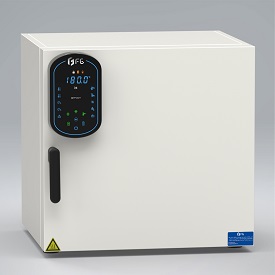
Laboratory Oven (Lab Oven) is one of the key instruments in research, industrial, and educational laboratories. By providing uniform dry heat, this device is used for drying samples, sterilizing equipment, and performing thermal tests. Laboratory ovens have widespread applications across various industries such as food, pharmaceuticals, oil and gas, petrochemicals, quality control laboratories, and academic research centers. With the ability to adjust temperature from ambient up to over 300 °C, these ovens deliver stable and precise thermal conditions. Available in both standard (drying) and forced-air models, laboratory ovens play a crucial role in enhancing the accuracy and efficiency of thermal processes.
In the following sections, you can explore the specifications, pricing, and a comprehensive buying guide to help you choose the best laboratory oven for your needs.


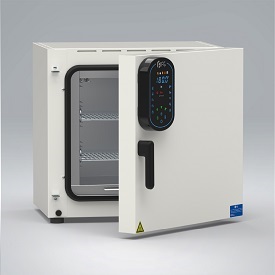
What is a laboratory oven?
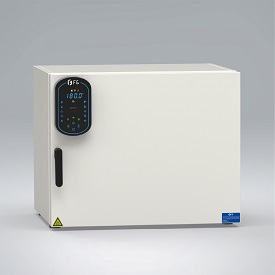
Laboratory Drying Oven (Lab Oven) is one of the essential instruments in laboratories, used for removing moisture from samples and drying glassware. This device generates uniform heat and, in some models, employs a fan system to introduce dry, fresh air into the chamber while simultaneously expelling moisture through dedicated vents. This controlled process enables rapid drying of samples while preventing unwanted physical and chemical changes, ensuring accuracy and reliability in laboratory results.
A Laboratory Oven plays a crucial role in achieving accurate and reproducible experimental results — from simple drying tasks to complex thermal tests with precise temperature control. One of the most common types of this device is the Hot Air Oven (Laboratory Oven), widely used in industries and research centers. Thanks to its high accuracy and thermal stability, it is considered a reliable choice for a wide range of laboratory processes.
Types of Laboratory Ovens Based on Air Circulation
Laboratory ovens are classified into two main categories based on their air circulation system: Gravity Convection Ovens and Mechanical Convection Ovens. Understanding the differences between these two models is essential for selecting the right oven for specific laboratory applications.
1. Gravity convection oven
In gravity convection ovens , temperature distribution is based on the natural upward movement of hot air, and there is no circulating fan for active air movement. This structure creates a very gentle airflow, which is ideal for drying samples that require minimal airflow. These types of ovens are typically used in experiments where physical and chemical changes to the sample must be minimized.
2. Mechanical Convection Oven (Fan-Assisted Oven)
In mechanical convection ovens , or fan ovens , an internal fan continuously circulates air within the chamber. This design allows for a more even distribution of temperature throughout the interior and a faster drying process. One of the important advantages of this model is the rapid return of the temperature to the set level after the device door is opened and closed, which makes it very suitable for applications requiring high thermal accuracy.
The choice between a gravity convection oven and a mechanical (fan-assisted) convection oven should be based on the sample type, its sensitivity to airflow, and the required drying rate.
Application of laboratory oven
Laboratory ovens are one of the most widely used equipment in various scientific and industrial fields, used in laboratories in chemistry, physics, biology, engineering, food, pharmaceutical, metallurgical , and many other sectors. This device, with its precise temperature control capability, allows for a variety of thermal processes. Some of its most important uses include:
1. Drying laboratory samples
-
Drying solid filters, test tubes, powders and sensitive chemicals
-
Removing moisture from samples before performing chemical and physical tests
-
Preparing samples for more accurate analysis in measuring devices
2. Material strength and resistance testing
-
Testing the compressive and tensile strength of building materials such as concrete, cement, and bitumen at specific temperatures
-
Investigating the change in mechanical properties of materials under controlled heating
-
Assessing the durability of materials in simulated environmental conditions
3. Measurement of physical and chemical properties
-
Performing tests such as solvent extraction, moisture absorption, leak resistance, tensile strength, and hardness
-
Study of temperature-dependent chemical reactions
-
Identifying structural changes in materials under the influence of heat
Choosing the right temperature and duration for the sample to be in the oven plays a crucial role in the accuracy of test results and process quality. In the pharmaceutical and food industries, this directly affects the safety and quality of the final product.
Application of laboratory oven
Main components of a laboratory oven
Laboratory ovens are typically made up of a set of key components, each of which plays an important role in the accurate and optimal operation of the device:
-
Body: Made of stainless steel or metal sheets with a resistant coating and equipped with advanced thermal insulation, which maintains the internal temperature and increases the safety of the device.
-
Door: The oven door may be made of heat-resistant glass or steel, and some models have a safety lock to prevent accidental opening.
-
Heating system: High-quality electric heating elements that produce heat evenly and provide the desired temperature.
-
Air circulation fan: An internal fan that is responsible for the homogeneous distribution of heat inside the chamber, ensuring that the temperature inside the oven remains the same and stable at all points.
-
Temperature controller: High-precision digital or analog temperature control system, which allows for precise and stable adjustment of the working temperature.
-
Temperature Sensors and Thermostats: Precision temperature sensors and safety thermostats continuously monitor the internal temperature and, when necessary, switch the heating system on or off to prevent fluctuations and potential hazards.
Smart laboratory oven
Smart laboratory ovens are a new generation of laboratory equipment that, by utilizing advanced technologies, offer numerous capabilities to increase accuracy, safety, and ease of use. These devices are equipped with remote control systems that allow users to manage oven temperatures and settings online through mobile apps or web-based platforms.
In addition, smart ovens have real-time warning systems that notify users in the event of any abnormalities, such as temperature fluctuations or power outages. Another important feature of these devices is the accurate recording and storage of temperature and operational data, which allows for automatic analysis and documentation of experiments.
These ovens are connected to the Internet using Internet of Things (IoT) technology and allow integration with other laboratory equipment and laboratory management systems, which improves efficiency and reduces human errors.
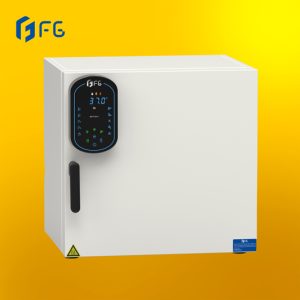
Smart laboratory oven features
-
Smart Temperature Control
The device temperature is automatically regulated and controlled with very high precision, ensuring laboratory processes are performed with maximum accuracy. -
Wireless Connectivity and Remote Control
Smart laboratory ovens are capable of connecting to the internet, enabling monitoring and control of device parameters remotely via mobile phones, tablets, or computers. -
Advanced Touchscreen Display
These devices are equipped with an advanced touchscreen featuring a simple and user-friendly interface, allowing precise monitoring and adjustment of operating parameters. -
Data Logging, Storage, and Transfer
Temperature and operational data are automatically recorded and can be transferred to other systems for analysis and documentation purposes.
FG Smart Monitor Software
FG Smart Monitor software is a specialized web-based platform from Fan Azma Gostar Company that allows laboratory ovens to be connected to the Internet. Using this software, users can view, manage, and analyze their device performance data and reports online and in real time.
This advanced software is designed for precise monitoring, automatic data recording, and remote control in compliance with international standards, helping users manage their laboratory processes with greater accuracy and confidence.
Types of laboratory ovens
There are different types of laboratory ovens that are selected depending on the application and needs of the laboratory:
-
Vacuum Oven: Rapid drying of samples in vacuum conditions at lower temperatures, suitable for heat-sensitive materials.
-
Drying Oven: Drying samples at a uniform temperature, in fan-operated and fan-less models for various applications.
-
Sterilization Oven: Sterilization of laboratory instruments with dry heat at high temperatures.
-
Industrial Oven: Large, high-capacity devices for industrial and research processes.
How a laboratory oven works
A laboratory oven consists of an insulated chamber heated by high-precision heating elements. The temperature inside the chamber is regulated and maintained by a temperature control system to provide optimal and uniform conditions for laboratory processes such as drying, sterilization, and thermal testing.
More advanced fan oven systems utilize uniform air circulation to distribute temperature homogeneously throughout the chamber, providing more accurate and repeatable results.
How to work with a laboratory oven
Technical specifications of laboratory oven
The technical specifications of a laboratory oven are one of the most important factors for choosing the right device in various laboratories. Accurate knowledge of the oven’s technical parameters helps to select and use the device according to laboratory needs, research projects, or industrial processes.
Laboratory oven temperature range
Laboratory ovens are typically designed for applications that require precise control of high temperatures. The minimum temperature that can be set in laboratory ovens usually starts at around 50°C ; this temperature is usually 15°C above the ambient temperature of the laboratory. For example, if the ambient temperature of the laboratory is 25 degrees Celsius, the minimum operating temperature of the device will be 40 degrees.
It should be noted that ovens are mostly used for temperatures above 80 degrees Celsius, and incubators are usually used for lower temperatures.
Maximum temperature of the laboratory oven
The maximum adjustable temperature in most laboratory ovens is between 200 and 300 degrees Celsius . However, in more advanced and industrial models, this temperature can reach 500 degrees Celsius or higher . This feature is critical for certain applications such as complex thermal processes, drying temperature-resistant samples, and sterilizing equipment.
At high temperatures, in addition to the ability to regulate temperature, thermal stability and the ability of the device to maintain a constant temperature over time are of great importance so that test results are accurate and repeatable.
Dimensions of the laboratory oven
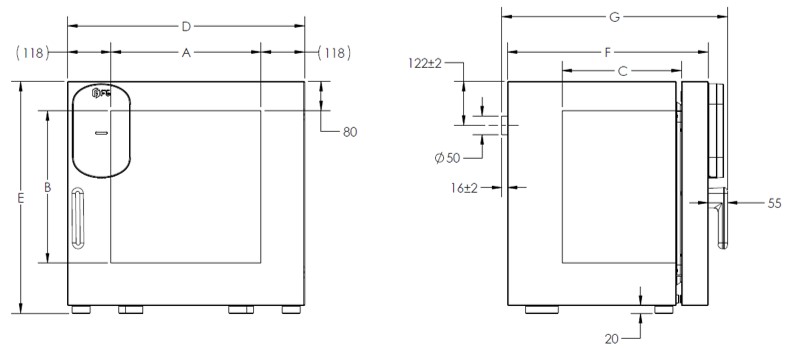
The dimensions of a laboratory oven are one of the key parameters in selecting the right device, and they must be chosen according to the available laboratory space and operational requirements. In addition to the footprint, sufficient clearance is necessary inside and around the oven to ensure proper airflow, optimal thermal performance, and uniform temperature distribution. Selecting an oven with appropriate dimensions not only facilitates ease of use but also prevents issues such as heat accumulation or temperature instability.
Laboratory oven thermal accuracy
The accuracy of the oven is determined according to the valid DIN 12880 standard. This standard includes three key parameters:
-
Temperature Fluctuation: The amount of instantaneous temperature changes within the set range.
-
Temperature Variation: The difference in temperature between different points inside the chamber.
-
Temperature deviation: The difference between the actual temperature of the device and the set temperature.
These values should be listed in the device data sheet so that the user can choose the best model based on the required accuracy.
Warm-up and temperature return time
-
Heating Time: The time it takes for the device to reach the set target temperature from ambient temperature. This factor is of great importance in applications that require rapid heating.
-
Recovery Time: The time it takes for the temperature inside the oven to return to the set range after the door is opened. This parameter is critical to prevent the negative impact of repeated door opening and closing on the test process.
Air Exchange
The Air Exchange feature indicates the amount of air exchange or fresh air circulation inside the oven chamber, which has a direct impact on drying quality and temperature stability. In some models, the air exchange control system can be adjusted to provide ideal conditions for a variety of samples.
Second controller or safety thermostat in laboratory oven
To increase safety and prevent damage to elements and unwanted temperature increases, most laboratory ovens are equipped with a second controller or safety thermostat . This thermostat acts as a thermal fuse and shuts down the device in the event of a failure of the main controller or excessive temperature increase to prevent possible accidents and costly breakdowns.
Laboratory oven standards
To ensure optimal performance, safety, and quality of laboratory ovens, manufacturers are required to comply with internationally recognized standards. These standards not only ensure the quality of the device’s construction, but also take into account the health of users and environmental compatibility.
The most important standards used in the production of laboratory ovens:
-
ISO 9001: A quality management system standard that ensures that production processes and quality control of devices are carried out systematically and effectively.
-
ISO 14001: Environmental management standard that demonstrates compliance with environmental protection principles during the production process.
-
ISO 13485: For medical and laboratory equipment; this standard ensures that devices comply with quality and safety requirements for use in sensitive medical and laboratory environments.
-
CE (Conformité Européenne): A certification mark that indicates that the device complies with European Union safety and health regulations.
-
UL (Underwriters Laboratories): American safety standard that guarantees the correct electrical safety performance of the device.
-
CSA (Canadian Standards Association): A Canadian safety standard that, like UL, emphasizes ensuring the safety and quality of products.
The difference between a laboratory oven and an incubator
Laboratory ovens and incubators are both key laboratory equipment, but their applications, temperature ranges, and operating conditions are completely different.
Laboratory ovens are mainly designed for drying, sterilizing, and performing thermal processes at high temperatures, and their temperatures are usually set from 50 to 300 degrees Celsius or more.
In contrast, a laboratory incubator is used for processes that require maintaining a lower constant temperature and precise humidity control, such as cell growth and microbial cultures, and typically has a temperature between 20 and 60 degrees Celsius.
The difference between a laboratory oven and an incubator
Important points when buying a laboratory oven
1. Temperature range and accuracy
It is very important to choose an oven with a temperature range that suits your laboratory needs . Be sure to pay attention to the device’s thermal accuracy and temperature stability over time. Temperature accuracy and uniformity are evaluated according to DIN 12880 standard.
2. Capacity and internal dimensions
The capacity of the oven should be proportional to the volume of samples and equipment used. The dimensions of the device should also be compatible with the laboratory space to allow for easy installation and operation.
3. Inner chamber material
The inner chamber material should be heat and corrosion resistant. Stainless steel (SS304 or SS316) is usually the best choice, as it is durable and easy to clean.
4. Air circulation system
The convection system ensures uniform temperature throughout the chamber. Check that the appliance has an adjustable speed air circulation fan.
5. Temperature controller and display
The high-precision digital controller and easy-to-read display allow for easy operation and precise temperature adjustment. Some models have the ability to program and store test protocols.
6. Safety features
The presence of a safety thermostat or second controller to prevent excessive temperature increase, an automatic shutdown system in case of emergency, and proper insulation are important safety points
7. Energy consumption
Ovens with optimal energy consumption and good thermal insulation, in addition to reducing electricity costs, have more stable performance.
8. Standards and certifications
The manufacturer must have manufactured the device in accordance with international standards such as ISO 9001, CE, and DIN12880 to ensure the quality and safety of the device.
9. After-sales service and warranty
The existence of strong support services, the provision of spare parts, and a valid warranty are some of the things that contribute to the longevity and efficiency of the device.
Laboratory oven maintenance and cleaning
Ovens are vital equipment in laboratories, used for thermal processes and drying samples. Proper maintenance and regular cleaning of this device play an important role in maintaining its operating accuracy and increasing its useful life.
Laboratory oven maintenance
-
Installation and maintenance environment: The oven should be kept in an environment with standard temperature and controlled humidity to avoid problems caused by temperature and humidity fluctuations. The device should also be installed in a safe location, free from vibration and shock, to prevent damage to sensitive internal components.
-
Datalogger Battery Maintenance: Many modern ovens, such as FG models, are equipped with a datalogger to record the temperature of the device. For this system to function properly, the device’s battery must always have sufficient charge so that the data is recorded correctly in the event of a power outage.
-
Periodic Calibration: To maintain the temperature accuracy of the device, it is essential to calibrate the oven regularly using standard equipment. This ensures that the set temperatures accurately match the actual temperature inside the chamber.
Cleaning the laboratory oven
-
Periodic Cleaning: The oven should be cleaned regularly, based on the frequency of use, to prevent the accumulation of contaminants, dust, and sample residue.
-
Suitable detergents: Use mild, non-acidic detergents to clean the inside and outside of the device. Avoid using strong solvents such as thinners and industrial alcohols, as these can damage the device’s coatings and sensitive parts.
-
Cleaning the interior: Using a soft cloth or non-abrasive sponge to clean the interior surface of the oven is the best way to prevent scratches and damage to the steel coating.
Laboratory oven calibration
Regular calibration of laboratory ovens is one of the most important maintenance steps for these devices, ensuring the accuracy and precision of the set temperature. Failure to calibrate properly can lead to inaccurate test results and reduced device performance.
Key points in laboratory oven calibration
-
Regular Schedule: It is recommended to establish a specific and regular schedule for oven calibration. The intervals of this schedule should be determined based on the intensity and type of use of the device, operating conditions and manufacturer’s instructions. Annual or semi-annual calibration is common.
-
Compliance with standards and guidelines: Calibration must be performed in accordance with internationally recognized standards and the instructions in the device’s manual. It is essential to use validated and calibrated calibration equipment to measure the temperature inside the oven.
-
Accurate recording and documentation: All calibration results should be accurately recorded and maintained. If significant deviations are observed between the measured temperature and the set temperature, the device should be checked, readjusted, or repaired.
-
Operator training: Laboratory operators and technicians must receive the necessary training on the calibration process, use of equipment, and recording of results so that these operations are performed correctly and in a standardized manner.
-
The impact of calibration on the quality of experiments: Accurate and timely calibration of the oven ensures that the temperature inside the device is consistent with the set temperature, which will ensure the validity and accuracy of laboratory results.
The best laboratory oven manufacturer
FG Company is known as one of the top and leading manufacturers of laboratory equipment in Iran . This company produces intelligent laboratory ovens with high thermal accuracy, using modern technologies and strictly adhering to international standards such as ISO 9001 and DIN 12880 .
Distinctive features of FG ovens:
-
Accurate and stable temperature control using advanced digital controllers
-
Optimal air circulation system for temperature uniformity inside the chamber
-
Using high-quality stainless steel for durability and corrosion resistance
-
Benefit from advanced safety systems such as safety thermostat and second controller
-
Ability to connect to data loggers and data management software to record and monitor temperature
-
Providing strong after-sales service and a reliable warranty that provides buyers with confidence.
Laboratory oven price
The price of laboratory ovens is influenced by various factors, including the type of unit (standard or smart), the dimensions and capacity of the internal chamber, the adjustable temperature range, and additional features such as data loggers and advanced temperature control systems.
To obtain an up-to-date and accurate price list for FG laboratory ovens, along with detailed technical specifications for each model, it is recommended to contact the sales department of FG. This will allow the most suitable option to be proposed based on the specific requirements of your laboratory.
Buy a laboratory oven
With years of experience in the design, manufacturing, and supply of high-quality smart laboratory ovens, FG is fully prepared to provide expert consultation and comprehensive after-sales services to its valued customers.
To purchase a laboratory oven tailored to your specific laboratory requirements, as well as to receive technical guidance and assistance in selecting the most suitable model, you are welcome to contact the company’s sales and support team.
Video introduction of the laboratory oven