
Laboratory incubator
A laboratory incubator is one of the most essential instruments in microbiology, cell culture, pharmaceutical, and environmental laboratories. Its primary function is to provide precisely controlled environmental conditions for the growth and proliferation of microorganisms and cells.
This device is widely used across various fields, including clinical diagnostic laboratories, pharmaceutical production, microbiology, molecular biology, food industries, oil and gas, cosmetic industries, and research centers. Selecting and purchasing a high-quality laboratory incubator plays a critical role in ensuring the accuracy, reliability, and efficiency of experimental and analytical results.
History of the Incubator
The earliest incubators were developed in the 19th century to support the care and survival of premature infants by providing a stable, protected thermal environment. The concept was later adapted for laboratory use, where scientists needed reliable temperature control to cultivate microorganisms and cells. Early laboratory incubators were simple heated chambers—often insulated boxes using basic heat sources—designed only to maintain a target temperature. As laboratory standards and research requirements evolved, incubators advanced into high-precision systems with improved uniformity, stability, safety layers, and digital control to ensure repeatable scientific outcomes.
What Is a Laboratory Incubator?
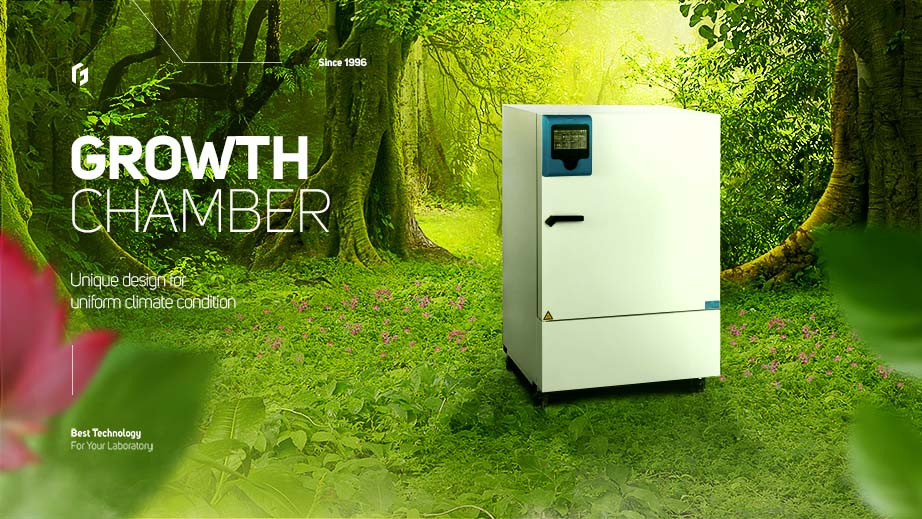
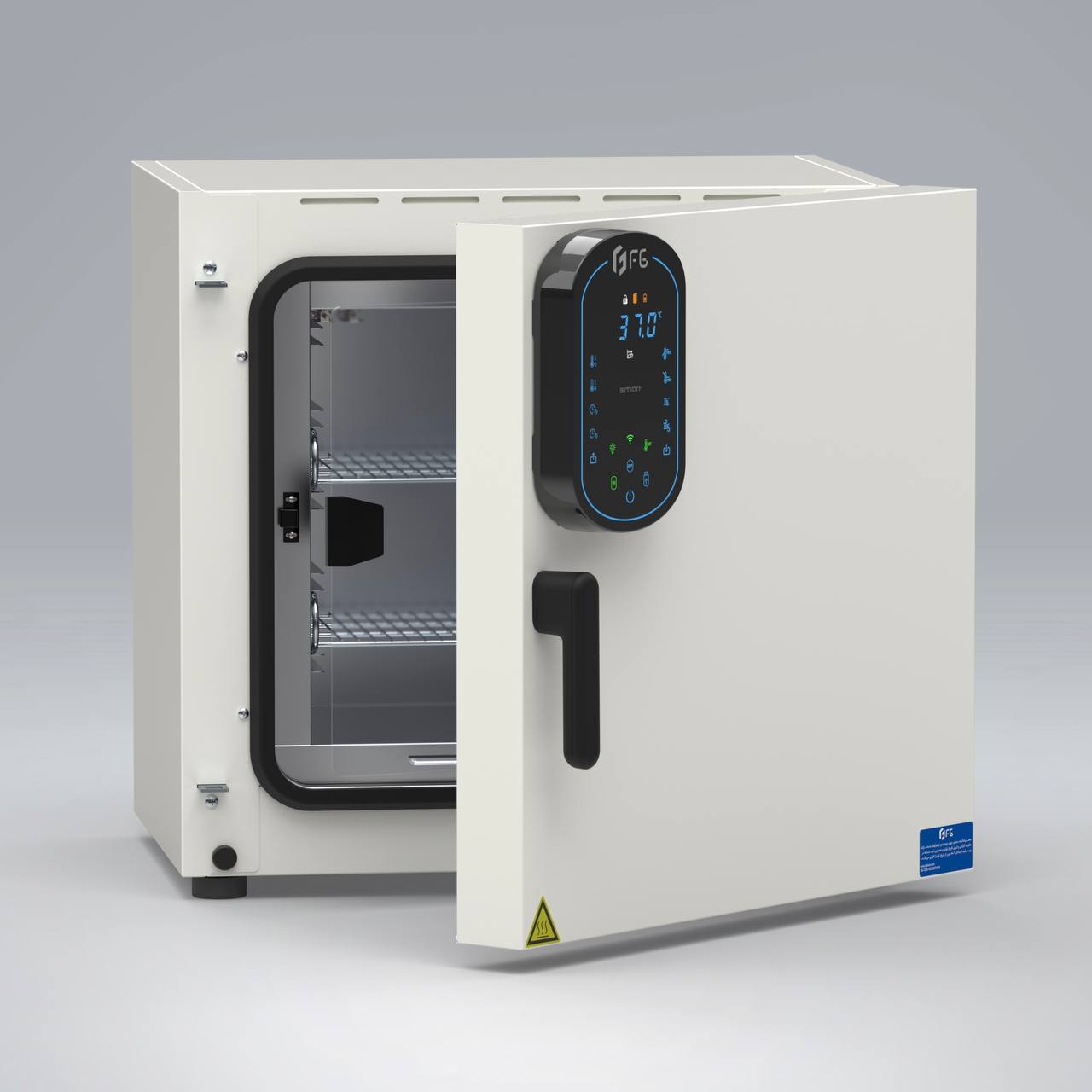
A laboratory incubator is a controlled-environment chamber designed primarily to maintain a stable and uniform temperature to support the growth and cultivation of microorganisms, bacteria, and eukaryotic cells. Depending on the application, incubators may also control additional parameters such as humidity, gas composition (e.g., CO₂), and agitation.
Incubators are essential instruments across a broad range of environments, including:
-
Pharmaceutical and clinical diagnostic laboratories
-
Microbiology, cell biology, and molecular biology labs
-
Food processing and quality-control laboratories
-
Oil and gas laboratories
-
Cosmetics and personal-care testing
-
Research centers, including agricultural and environmental labs
Because biological systems are highly sensitive to thermal fluctuations, incubator quality directly affects data accuracy, repeatability, and experimental reliability.
Incubator Temperature: Typical Setpoints and Operating Ranges
Basic incubators are insulated chambers with adjustable heating elements. Many are designed to operate above ambient temperature, while specialized models support expanded ranges.
Common temperature points in laboratory practice include:
-
37°C: Widely used for pathogenic bacteria and many mammalian cell-related workflows.
-
30°C: Frequently used for certain yeasts and temperature-sensitive biological assays.
Some incubators are engineered for elevated temperature operation (up to 100°C) when protocols demand higher setpoints. In all cases, performance should be evaluated not only by the set temperature but by the incubator’s ability to maintain stability and uniformity across the chamber.
Types of Laboratory Incubators
Incubators are generally categorized as industrial, medical, and laboratory incubators. Within laboratory environments, the most common types are:
1) Standard (Thermal) Incubator
Standard incubators typically operate in the 30–70°C range and represent the most widely used incubator class. They are primarily used for microbial and cellular culture maintenance under controlled temperature conditions.
High-performance thermal incubators are defined by:
-
Temperature accuracy (controller precision is not sufficient alone)
-
Low fluctuation (stable temperature over time)
-
High uniformity/isothermality throughout the chamber
-
Fast recovery after door opening
-
Safety systems to prevent over-temperature conditions
In advanced designs, technologies such as HCT (focused on uniformity engineering) are used to optimize thermal distribution and reduce hot/cold zones.
2) Refrigerated Incubator
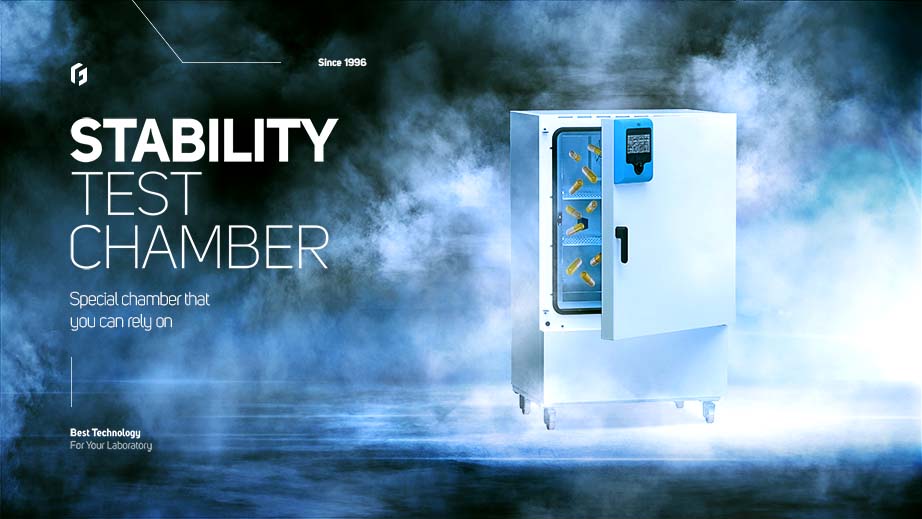
Refrigerated incubators expand capability below ambient temperature and typically operate around −5°C to +70°C (range varies by model). They are used for storage, stability studies, and incubation of samples requiring lower temperatures, including bacterial, viral, and fungal culture media.
Key performance requirements include:
-
Stable cooling without temperature cycling
-
Uniformity during both heating and cooling
-
Reproducibility for long-duration protocols
FG refrigerated incubators emphasize chamber uniformity and stability. Notably, FG references validated temperature uniformity across 27 measurement points inside the chamber, supporting consistent and reproducible incubation conditions. Temperature stability during cooling is enhanced through NON-CUT technology, intended to maintain steady control even in refrigeration mode.
3) CO₂ Incubator
CO₂ incubators are designed for applications requiring strict control of temperature and gas composition, especially for animal/human cell culture and tissue work. By regulating CO₂ concentration, these incubators help stabilize culture media pH, enabling physiologically relevant conditions for cell viability and growth. They are widely used in biomedical research, tissue culture, and cell biology laboratories.
4) Shaking Incubator
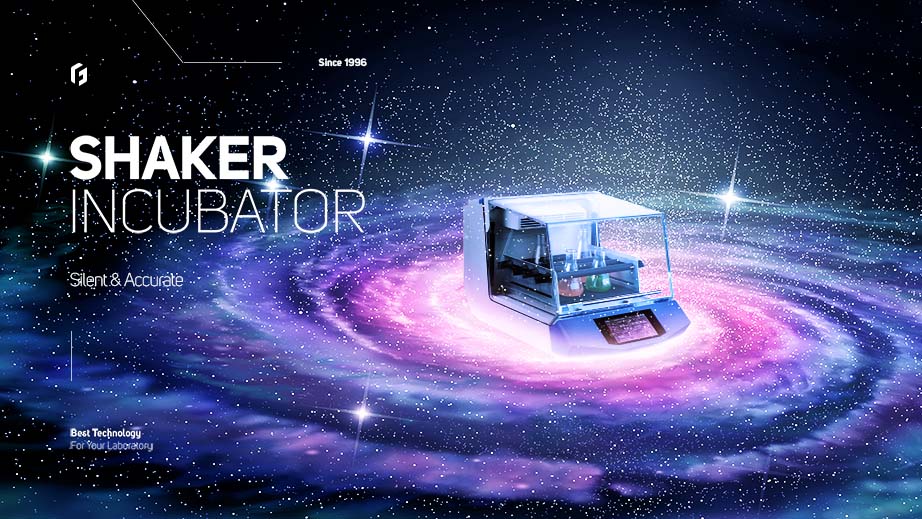
Shaking incubators combine temperature control with continuous agitation (typically orbital). This improves oxygen transfer and mixing, making them ideal for microbial cultures and cell systems that require constant motion.
Key capabilities include:
-
Programmable shaking speed (RPM)
-
Stable motion under load
-
Minimal vibration and noise
-
Reliable temperature control during agitation
FG shaker incubators are positioned as premium systems with features such as an ergonomic industrial design, an intelligent digital controller with a 7-inch LCD, touch keys, high temperature accuracy, CMT technology, and optional connection to a circulating chiller for chamber cooling.
Standard vs. Refrigerated Incubator: Practical Differences
When selecting between standard and refrigerated models, the differentiators are typically:
-
Temperature range: Refrigerated models support sub-ambient temperatures; standard models generally do not.
-
Cooling system: Refrigerated incubators include active cooling; standard incubators are heating-only.
-
Application focus: Standard units are used primarily for cultivation at elevated temperatures; refrigerated units are used for low-temperature studies, controlled storage, and broader stability testing.
Airflow Design: Fan vs. Non-Fan (Convection Modes)
Incubators are commonly offered in:
-
GRAVITY CONVECTION (no fan): gentler airflow; suitable for samples sensitive to forced circulation.
-
FORCED CONVECTION (fan-assisted): better uniformity and faster recovery after door opening.
However, a fan alone does not guarantee uniformity. Uniform performance depends on airflow architecture, heater placement, chamber geometry, insulation strategy, and control algorithms.
Core Components and Functional Features
Most incubators include:
-
Temperature controller (digital preferred for accuracy and stability)
-
Air exhaust/vent valve to release vapor and humidity buildup
-
Timer (basic or programmable)
Advanced incubators may also provide:
-
Multi-step programming
-
Thermal gradient / ramp control (RAMP)
-
Delay timer for scheduled starts
-
Alarm systems for deviations and faults
Proper ventilation and controlled air exchange are important for preventing excess humidity accumulation that can lead to wetting/condensation effects on samples and labware.
Temperature Accuracy: What It Really Means
“Temperature accuracy” should not be interpreted as controller resolution alone. Practical incubator performance is determined by three critical metrics:
-
Controller accuracy (e.g., 0.1°C resolution/precision)
-
Temperature uniformity (difference between points inside the chamber)
-
Temperature fluctuation (variation over time at a single point)
For this reason, reviewing the device datasheet (including uniformity and fluctuation values) is essential when comparing incubators.
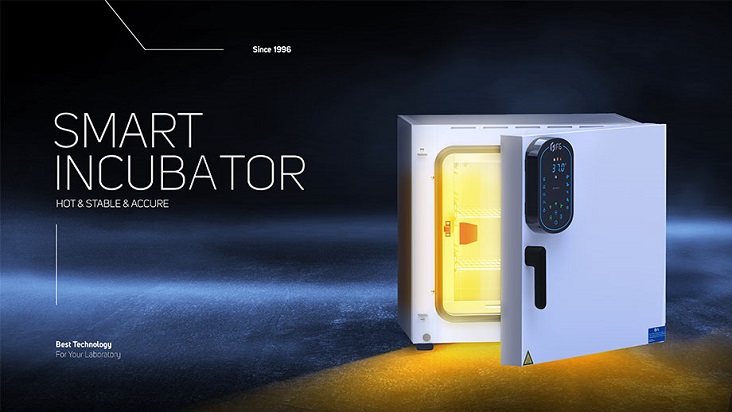
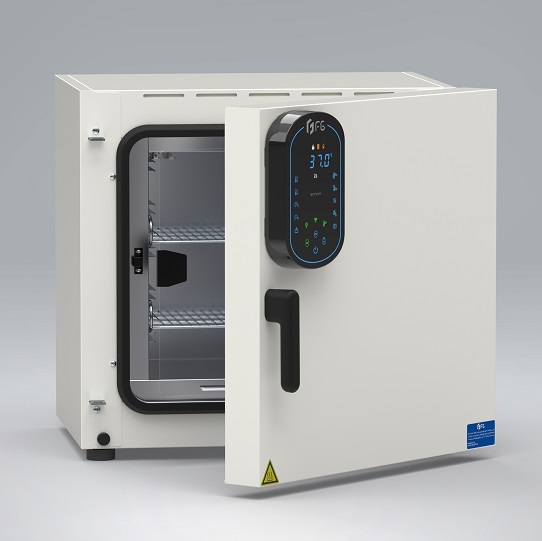
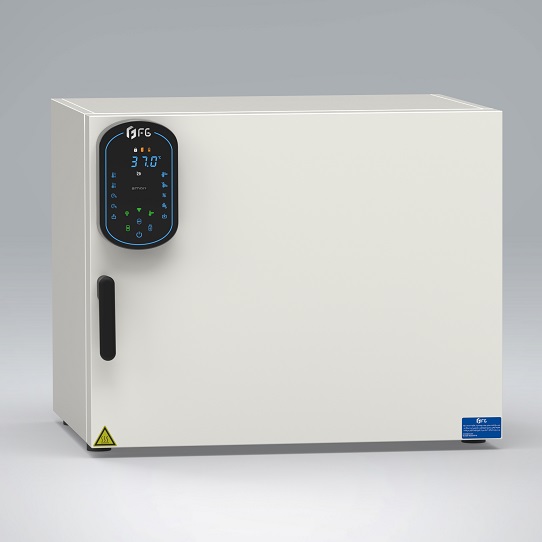
Smart Laboratory Incubator (FG Concept)
The FG Smart Laboratory Incubator is described as a triple-walled design engineered for high uniformity and stability. FG highlights:
-
0.1°C control accuracy
-
HCT technology for isothermality throughout the chamber
-
Integration with FG SMART MONITOR for remote monitoring and control
The smart controller concept includes:
-
Wi-Fi connectivity for remote access
-
Advanced control algorithms (including fuzzy control) to optimize stability and response
-
Data storage and performance logging in device memory
-
Cloud/online supervision for real-time monitoring and traceability
Key Parameters When Choosing a Laboratory Incubator
For a reliable purchase decision, evaluate the incubator against these technical criteria:
-
Temperature accuracy & uniformity
-
Thermal/refrigerated incubators should maintain consistent uniformity across the chamber.
-
In shaker incubators, stability must be maintained even during agitation.
-
Operating temperature range
-
Refrigerated units should cover sub-ambient to elevated temperatures as required by protocols.
-
Air circulation and ventilation control
-
Airflow design directly impacts uniformity and recovery time.
-
Chamber material and build quality
-
Stainless steel (304/316) improves corrosion resistance and cleaning/disinfection performance.
-
Control, display, and monitoring
-
Digital controller with alarms, calibration capability, and (when needed) data logging.
-
Safety systems
-
Over-temperature protection, fault alarms, and protective sensors.
-
Capacity and shelf/platform configuration
-
Match usable volume to workload; in shaker models, consider platform type and vessel compatibility.
-
Calibration and documentation
-
Availability of calibration certificates is a critical requirement in many laboratories and regulated environments.
-
After-sales service and warranty
-
Spare parts availability, technical support responsiveness, and service coverage materially affect lifecycle value.
Incubator vs. Laboratory Oven
Although incubators and ovens may look similar, they are designed for different purposes. Incubators primarily provide stable biological growth conditions (often near 37°C and within moderate ranges), whereas ovens are generally used for higher temperature processes such as drying, sterilization by dry heat, and thermal testing.
Purchasing and Price Considerations
Incubator pricing typically depends on:
-
Chamber volume (e.g., 55 / 120 / 240 / 400 L)
-
Temperature range (standard vs. refrigerated)
-
Uniformity and fluctuation performance
-
Control sophistication (programmable, smart monitoring, data logging)
-
Safety architecture and certifications
-
Optional accessories and calibration services
For accurate selection and quotation, laboratories should match the required performance metrics (uniformity, stability, range, recovery time, monitoring) to the appropriate incubator type and configuration.
Laboratory incubator introduction video